
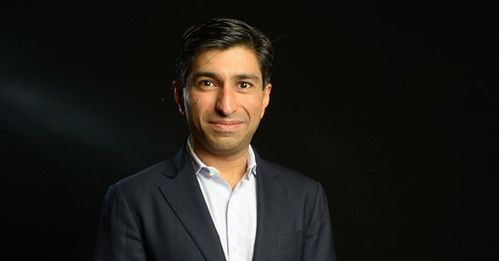
India’s urbanization, changing temperatures and ways of living cause shifts in demand for electricity. Expanding solar power creates new opportunities for the power sector. However, solar power is not available during peak hours of electricity demand. Peak hours for the generation of solar power occur during the day, while peak hours for the demand for electricity occur in the evenings. In the energy transition, India will have to plan the timing as well as the quantity of electricity generation, says Ratul Puri, Chairman of Hindustan Power.
India’s Evening Demand is Rising
The International Energy Agency (IEA) has reported an increasing trend in peak electricity demand in India in recent years. IEA’s report states that India’s peak load was 162 GW in 2017 and increased to 250 GW in 2024. The report further states that India’s summer peak in 2026 was around 270 GW. It is worth noting that India’s summer net peak loads generally occur between 8 pm to 9 pm. The main challenge in meeting the increasing power demand in India is during the evenings. Solar power can help meet a substantial part of India’s power demand during the day, but to meet the remaining demand and power demand during evenings, other sources of energy must also be part of the discourse on India’s renewable energy.
India’s fast-expanding solar energy capacity is reshaping the country’s daily energy system. The energy generated by solar panels is highest in the morning and peaks during the day, before waning during the evenings. Solar energy usually doesn’t meet peak electricity demand, which occurs at night. Consequently, during the evenings, there is a rise in energy demand for lighting, as well as other household appliances like fans and refrigerators. The same is also true for commercial and industrial energy demand. This creates a discrepancy between the peak hours of variable renewable energy generation and peak demand hours of the energy system. Closing this gap will require more flexible and variable energy capacity to complement the renewable energy capacity. Ratul Puri’s insights on the energy sector are also valuable as they focus more on the reliability of renewable energy capacity, as opposed to the expansion of renewable energy capacity alone.
One alternative to the timing mismatch problem is to use energy storage. Currently, during peak solar hours, excess electricity is often produced and wasted. With battery systems, storage can be used to store the electricity for later when demand increases. Storage is increasingly playing a key role in India’s power sector. As reported by ETEnergyWorld, India’s battery storage capacity reached 9.3 GWh by June 2026 from the addition of 8.2 GWh in the first half of 2026. The rise of battery storage was due to use cases such as grid balancing, peak management and integration of renewable energy. For Ratul Puri, the key to energy storage is that it allows renewable energy to be generated and stored to meet the demand when it is needed the most. Solar energy can be stored and shifted to be consumed at peak hours.
Ratul Puri on the Role of Flexibility in Meeting India’s Peak Power Demand
Flexible systems can help manage India's peak power demand. Flexibility in power generation can help balance the demand and reduce the gap caused by intermittency in renewable energy. On 30 June 2026, India's non-solar hour peak demand was 255.2 GW. The peak supply met was about 252.1 GW. This left a supply gap of about 3 GW in the evening. Some of the supply gap was attributed to the state transmission and distribution system by the government. There are many instances where peaks in demand are met by flexible systems. This demonstrates the benefits of a flexible system to respond to changing energy demands. Ratul Puri’s perspective on India’s power sector also highlights the importance of building flexibility across both energy supply and demand.
There are solutions to the problem of meeting peak demand other than transmission and storage. Storage helps shift energy to other time periods and transmission helps shift energy to other geographical locations. The combination of both can play a crucial role in balancing and meeting peak demand, especially with the increase in renewable energy. Solar power projects can produce more energy than required and help meet demand at other geographical locations during other time periods. Bringing transmission and storage in conjunction with energy generation can help balance and meet peak demand, especially with increased reliance on renewable energy.
The rate at which renewable capacity is built in India has slowed. The focus is now on integrating variable renewable energy (VRE) into the power system and making it available to end-users. Around 2030, half of the additional electricity demand in India will be met by solar photovoltaics (PV), as per the International Energy Agency (IEA). By 2030, the solar share of India’s electricity generation is expected to be around 18%. With increasing solar PV in the Indian power system, flexibility will remain essential for system planning.
Flexibility in the power system will be essential to integrate and balance variable and intermittent solar generation, as well as to manage demand. Ratul Puri says the focus of the Indian renewable energy system in the future will be on flexibility rather than capacity. The focus will be more on the flexibility of solar energy to meet peak evening demand by storing energy during the day. Also, other aspects of the Indian energy system such as transportation and industry, will require flexibility as well. Thus, as part of the transition of India’s energy system to a more renewable system, the focus will be more on integrating flexible solar energy in the evening to fill the peak demand, rather than other flexible sources.